

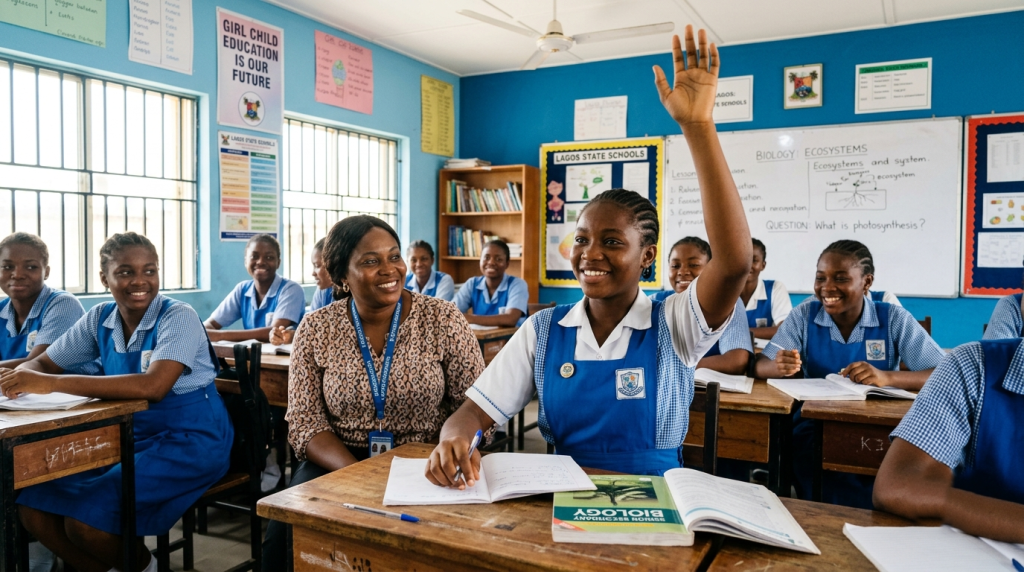
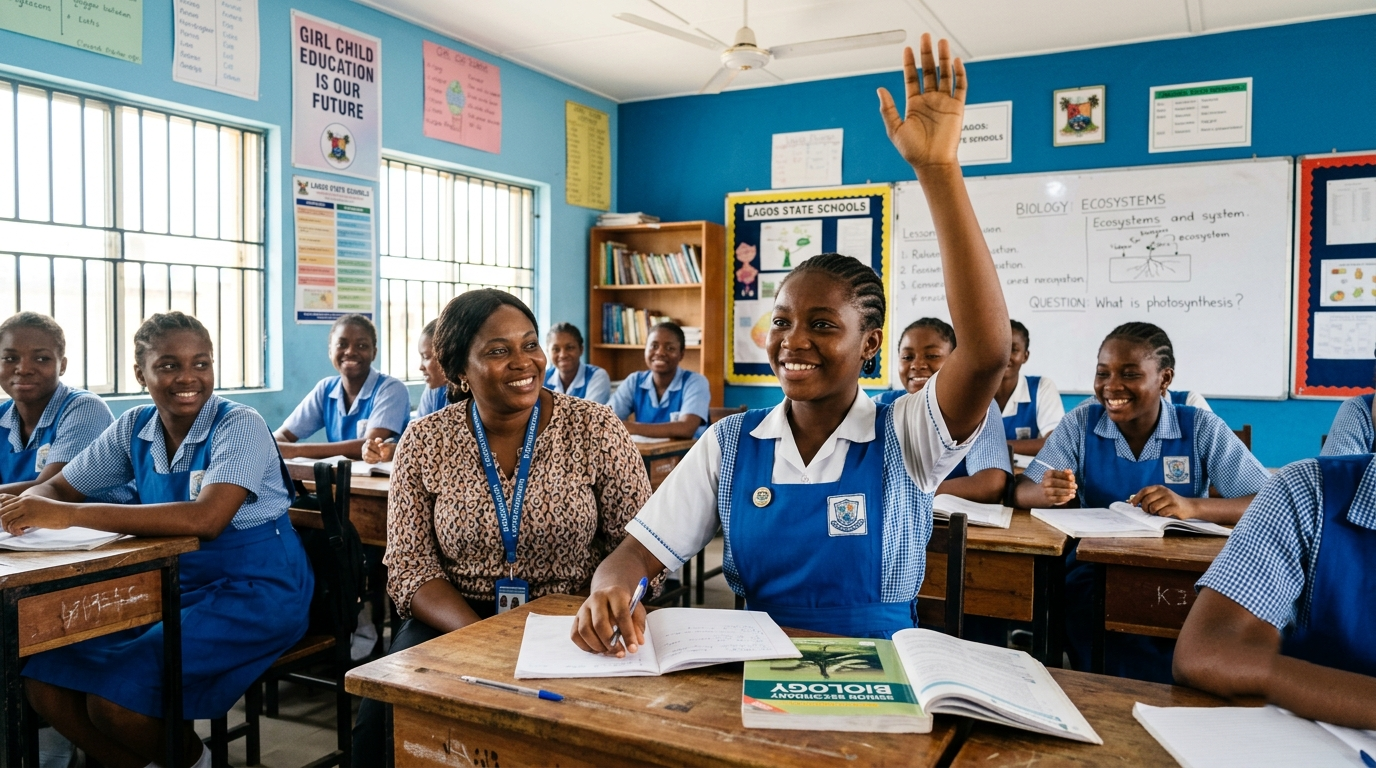
Imagine being thirteen years old and sitting in a classroom while worrying every minute that a stain might appear on your uniform.
Your teacher is explaining an important lesson, but you cannot focus. Your attention is fixed on one question: “Will anyone notice?”
For millions of girls across Nigeria, this is not an occasional concern—it is a monthly reality.
While discussions about improving education often focus on teacher quality, school infrastructure, and learning materials, one major barrier remains largely invisible: menstrual shame.
Menstrual shame is preventing countless girls from participating fully in school, affecting attendance, academic performance, confidence, and long-term educational outcomes. It is a hidden challenge that deserves urgent attention if we are serious about advancing girl-child education in Nigeria.
At edu4her, we believe that no girl should have to choose between managing her period and pursuing her education. Every girl deserves to learn with dignity, confidence, and support.
What Is Menstrual Shame?
Menstrual shame refers to the embarrassment, stigma, secrecy, and fear associated with menstruation.
Instead of being treated as a normal biological process, menstruation is often surrounded by silence, myths, and cultural taboos.
Many girls grow up believing that periods are something to hide. They are taught not to talk about menstruation openly, ask questions, or seek help when they need it.
As a result, menstruation becomes associated with anxiety rather than understanding.
When girls feel ashamed of their bodies, the effects extend far beyond their physical wellbeing. Their education suffers too.
How Menstrual Shame Affects Girls’ Education in Nigeria
Across Nigeria, many adolescent girls face challenges related to menstrual health management.
These challenges include:
- Limited access to sanitary products
- Lack of menstrual health education
- Poor sanitation facilities in schools
- Fear of embarrassment
- Social stigma
- Cultural misconceptions
Each challenge may seem small on its own, but together they create significant barriers to learning.
Many girls miss classes during their periods. Others attend school but struggle to concentrate because of discomfort, fear, or anxiety.
The result is a hidden education crisis that continues to affect girls across urban and rural communities.
Why Girls Miss School During Their Periods
Fear of Public Embarrassment
One of the biggest reasons girls stay home is fear.
Many worry about leaking through their uniforms or being teased by classmates.
For adolescent girls, social acceptance matters greatly. Even a small incident can feel devastating.
Rather than risk humiliation, some girls choose to remain at home.
Lack of Menstrual Products
For families facing financial hardship, sanitary products may not always be affordable.
Girls may resort to using cloth, tissue paper, or other alternatives that offer limited protection.
Without reliable menstrual products, attending school becomes difficult and stressful.
Inadequate School Facilities
Many schools still lack:
- Clean toilets
- Running water
- Soap
- Functional locks
- Private changing spaces
Without these basic facilities, managing menstruation during school hours becomes nearly impossible.
For many girls, staying home feels safer than navigating unsuitable school environments.
Breaking the Menstrual Shame Cycle in Schools
Even when girls attend school during menstruation, menstrual shame can significantly affect learning.
Reduced Participation
Girls who feel anxious about their periods often avoid drawing attention to themselves.
They may stop raising their hands, participating in discussions, or engaging in classroom activities.
Lower Concentration
Constant worry about leaks, discomfort, or embarrassment makes it difficult to focus on lessons.
Mental energy that should be devoted to learning is redirected toward managing fear and anxiety.
Loss of Academic Confidence
Repeated challenges can gradually reduce a girl’s confidence in her academic abilities.
When girls begin falling behind, they may incorrectly believe they are incapable of succeeding.
The Cultural Roots of Menstrual Stigma
To solve the problem, we must understand where menstrual shame comes from.
Silence at Home
Many girls reach puberty without receiving adequate information about menstruation.
Parents may avoid discussing the topic due to discomfort or cultural norms.
As a result, a girl’s first period often arrives unexpectedly.
Without preparation, confusion and fear quickly become associated with menstruation.
Community Beliefs and Taboos
In many communities, menstruation remains a sensitive topic.
Girls are often expected to remain silent about their experiences.
This silence reinforces the belief that menstruation is something shameful rather than natural.
Lack of Education for Boys
Many boys receive little or no education about menstruation.
Without understanding, curiosity can turn into teasing or ridicule.
Creating supportive school environments requires educating both girls and boys.
The Long-Term Consequences of Menstrual Shame
Menstrual shame does not only affect a few days each month.
Its effects can shape a girl’s future.
Increased Absenteeism
Missing school regularly creates learning gaps that become increasingly difficult to overcome.
Poor Academic Performance
Frequent absences often lead to lower grades and reduced educational attainment.
Higher Risk of School Dropout
Girls who consistently struggle with attendance may eventually disengage from education entirely.
Limited Future Opportunities
When girls leave school early, opportunities for higher education, employment, and financial independence become more limited.
This is why addressing menstrual shame is essential for improving girl child education in Nigeria.
Why Menstrual Health Is an Education Issue
Menstrual health is often viewed solely as a healthcare issue.
In reality, it is also an education issue.
A girl cannot fully participate in learning if she lacks the resources, knowledge, and support needed to manage her period confidently.
Ensuring menstrual dignity is therefore a critical step toward achieving educational equality.
Supporting girls during menstruation means supporting their right to learn.
Five Solutions That Can Keep Girls in School
1. Start Conversations Early
Parents should talk openly with daughters about menstruation before their first period.
Preparation reduces fear and builds confidence.
2. Improve Menstrual Health Education
Schools should provide accurate, age-appropriate menstrual health education.
Both girls and boys should understand that menstruation is a normal biological process.
3. Upgrade School Facilities
Every school should provide:
- Clean toilets
- Running water
- Soap
- Privacy
- Safe disposal options
These facilities help girls manage menstruation with dignity.
4. Increase Access to Menstrual Products
Governments, NGOs, schools, and communities should work together to improve access to affordable sanitary products.
School-based pad programs can significantly reduce absenteeism.
5. Create Safe Support Systems
Girls need trusted adults they can turn to for guidance and encouragement.
Teachers, mothers, female mentors, and community leaders all have important roles to play.
How edu4her is Breaking the Silence
At edu4her, we recognize that education goes beyond textbooks and examinations.
Girls need support that addresses both academic and personal challenges.
Our female mentors provide safe spaces where girls can:
- Ask questions without fear
- Build self-confidence
- Discuss puberty and menstrual health
- Receive academic guidance
- Develop leadership skills
We also support parents through educational resources and community engagement programs that encourage open conversations about girls’ wellbeing.
By combining mentorship, advocacy, and education, edu4her helps girls overcome barriers and remain focused on their future.
Breaking the Cycle Starts with Us
Every girl deserves the opportunity to attend school confidently, regardless of the time of the month.
Menstruation should never be a reason for a girl to miss class, lose confidence, or abandon her educational dreams.
When families, schools, communities, and organizations work together, we can eliminate menstrual shame and create environments where girls feel supported and empowered.
The future of Nigeria depends on educating its girls.
And educating girls begins with ensuring they can learn without fear, stigma, or shame.
Conclusion
Menstrual shame remains one of the most overlooked barriers to girl child education in Nigeria.
Its effects can be seen in absenteeism, reduced classroom participation, lower academic performance, and increased dropout rates.
The good news is that this challenge is solvable.
By improving menstrual health education, increasing access to sanitary products, creating safe school environments, and encouraging open conversations, we can help girls stay in school and thrive.
Together, we can build a future where every Nigerian girl has the confidence, support, and opportunities she deserves.